Work-in-progress prototype of an app that will provide highly efficient and targeted preparation for exams.
Tell me more ...
Imagine an academic examiner asks you three questions on neuroscience. Each requires only a short answer, but they're all very difficult and it would quickly become obvious you know nothing about neuroscience. Now imagine instead the examiner shows you a list of five possible questions, but this time says they'll return next week to ask you three of them at random. Over that week you'd likely find the answers to those five questions - perhaps with Google, AI, or even by asking an expert. By the time the examiner returns, you'd have memorised those five short answers. Your limited understanding of neuroscience doesn't matter - when questioned, you'd deliver fluent, rehearsed responses to whichever three questions get put to you and everyone would think you're an expert.
That's how academic assessment works.
When I was fifteen, my school year group sat our science GCSE a year early. When we did our mock exams, everyone in my biology class was underperforming by about two grades. A friend's mother, who was a teacher, explained to me that she'd been going through the biology course's official specification with him to help. I had no idea what a specification was so she showed me, and I found myself looking at a list of exactly what I needed to know for the exam. In hindsight of course such documents had to exist, but most students never see one, let alone use them.
I was stunned. The wording of the specification mirrored past exam questions and mark schemes, and the scope of content was far smaller than our hefty textbooks implied. I realised that if I had a list of everything I needed to know for the exam, then I effectively had a list of all possible questions. I could simply memorise the answer to each of them.
Two months after that disastrous mock exam, I achieved full marks in the real biology paper.
I would continue to learn over the next three years through GCSEs and A-Levels how deeply flawed academic assessment is. Now that I understood the system, I only ever achieved top marks again.
I have always wanted to create a product that uses these insights to help students raise their grades. My ambition is to create a web and mobile app that rivals textbooks by walking users through each course's official specification, helping them learn only the exact content they need. With many exams containing large amounts of theory that can be memorised with little academic skill, the app would emphasise short, flashcard-style content designed for effective recall.
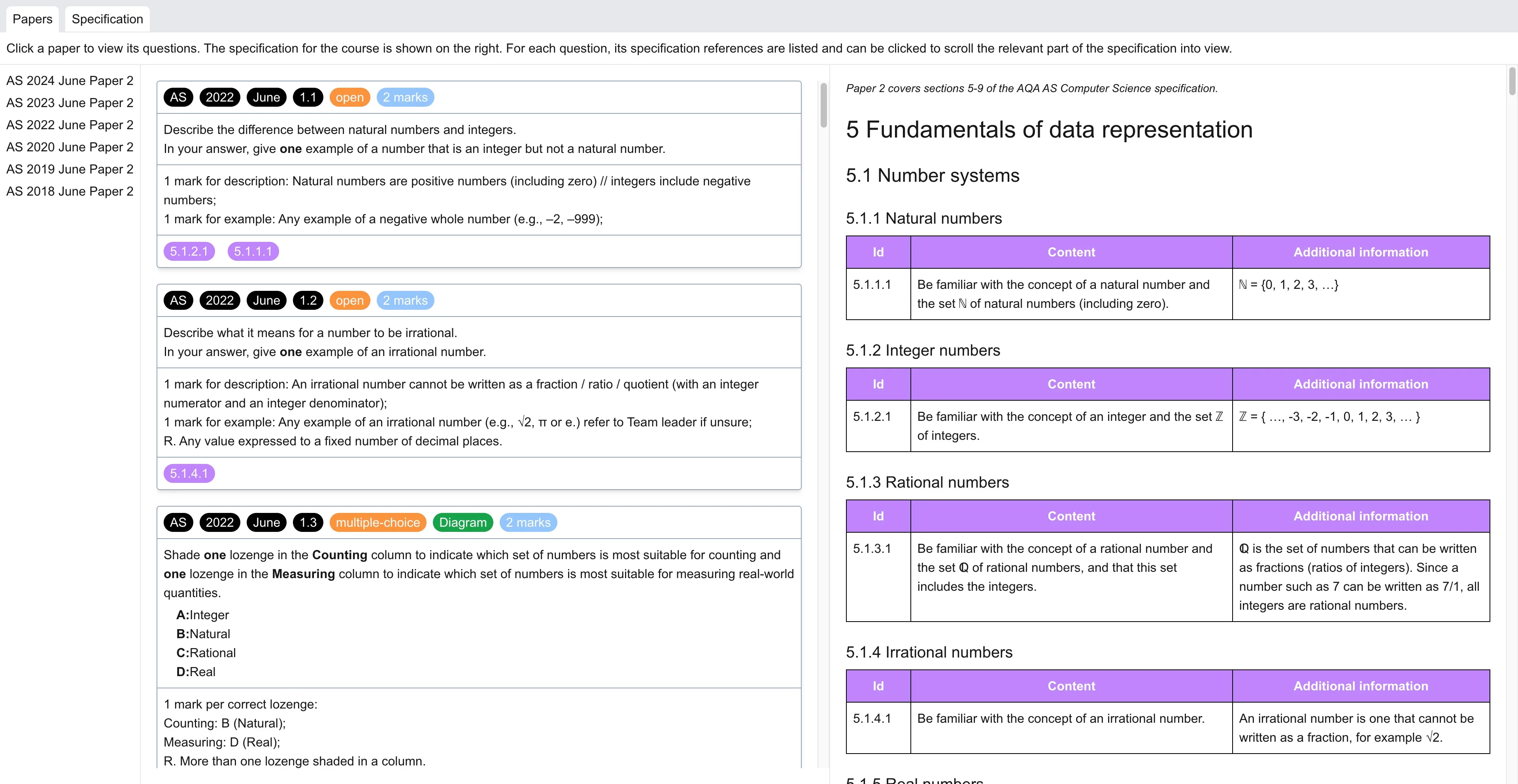
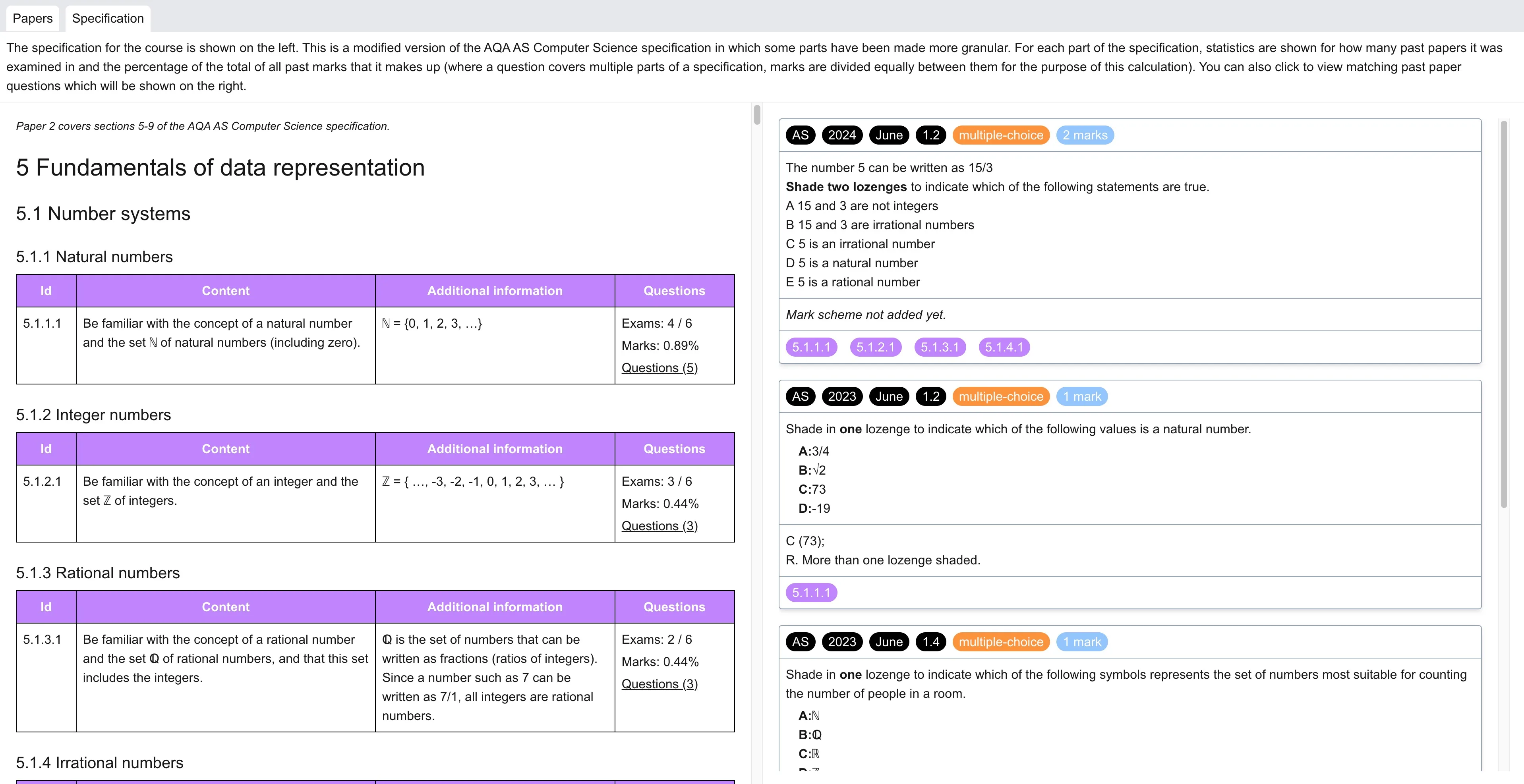
As a first step towards this product, I've developed a tool to map past questions for a particular exam to the exact parts of its specification. I have selected AQA AS Computer Science Paper 2 for my prototype as it's a course I know well having sat it myself. The tool is built using Next.js and hosted on Vercel, with automatic deployments via GitHub CI/CD integration. Tailwind CSS handles the styling. I used ChatGPT to extract structured JSON from PDF documents including the specification, past papers, and mark schemes.
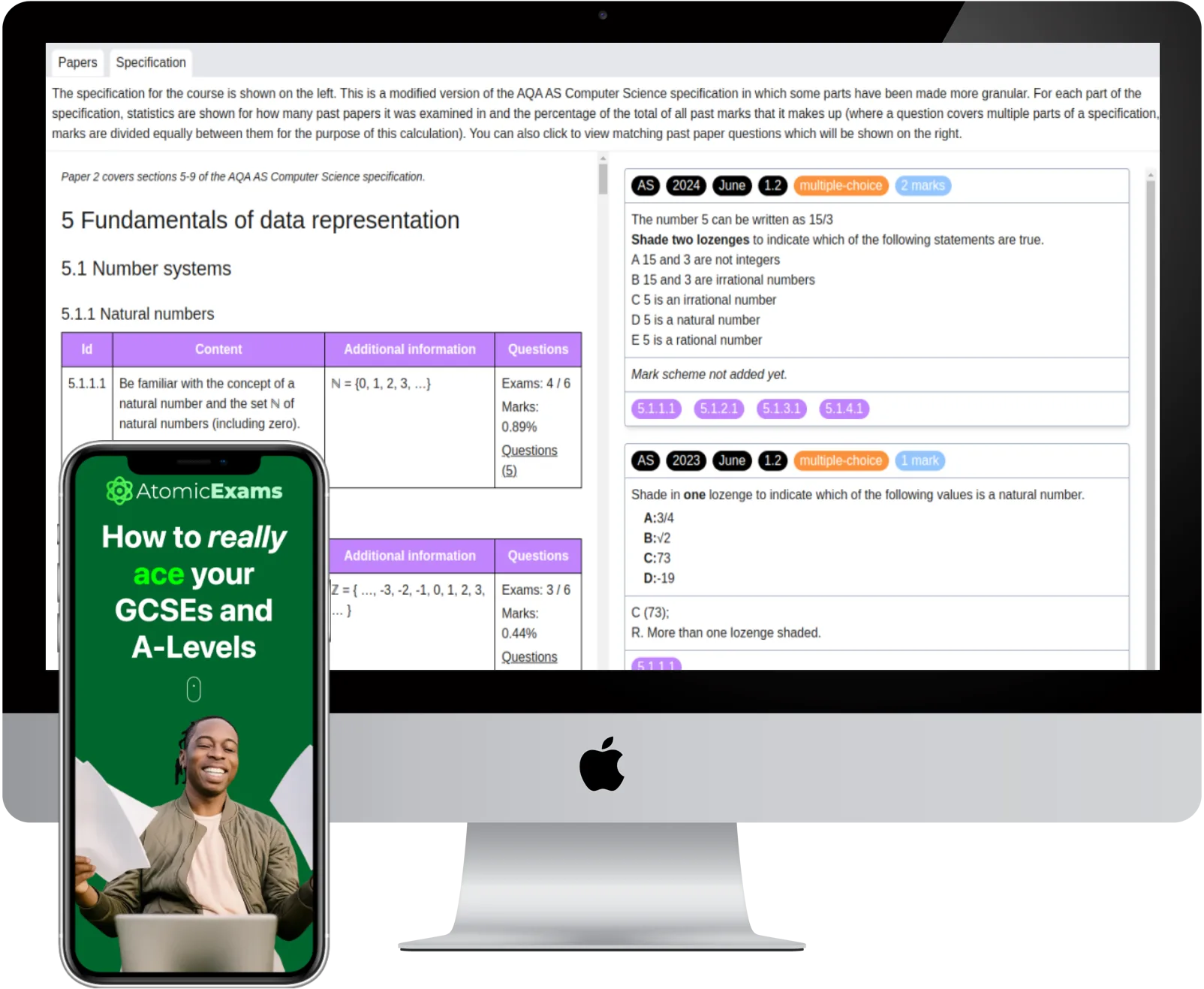
I have developed a landing page for this product using Astro, the repo for which is publicly available on my GitHub.
Screenshots